
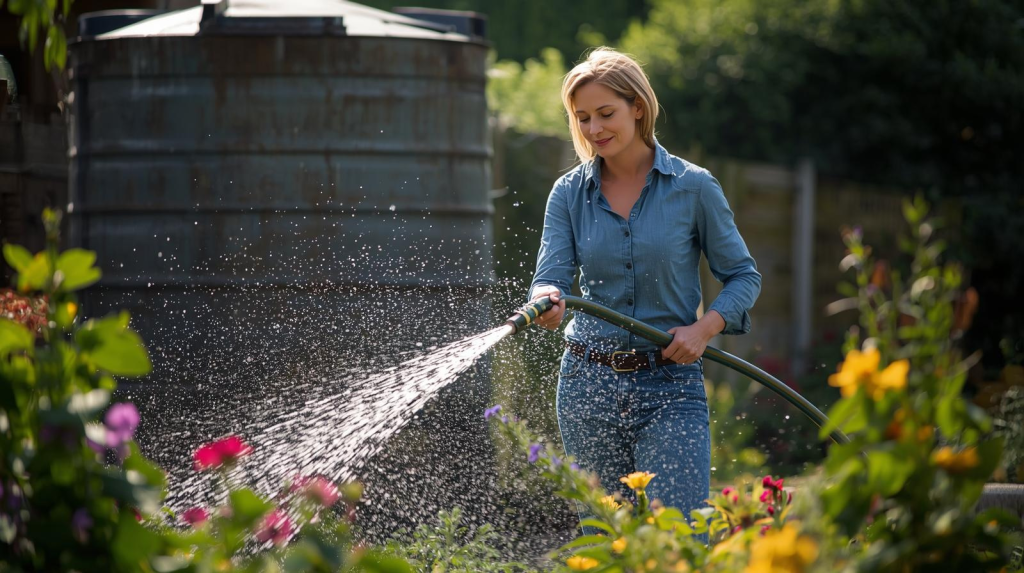
One of the simplest ways to manage summer demand is to prioritise how water is used. Gardens typically account for the largest increase in consumption. Adjusting watering schedules to early morning or late evening reduces evaporation and ensures more water reaches plant roots. Drip irrigation and soaker hoses deliver water directly to the soil, avoiding waste from spray systems that lose water to wind and heat.
Storage becomes increasingly valuable in dry periods. Rainwater tanks, even relatively small ones, can be used to supply garden irrigation, toilets, or washing machines, easing pressure on mains supply. During summer, tanks can be managed more strategically by reserving stored water for essential outdoor use and topping up whenever rainfall allows. Simple filtration ensures stored water remains suitable for its intended purpose.
Pressure management is another common issue revealed in summer. When multiple taps, showers, or irrigation zones are running at once, pressure drops can occur. And some mixers and shower systems need high pressure to operate effectively, so a drop in pressure can lead to a significant drop in performance. In some homes, pressure pumps to increase flow are an inexpensive retrofit. Or upgrades to older pipework can significantly improve performance and consistency.
In terms of water useage, small behavioural changes also make a difference. Using trigger nozzles on hoses, checking for leaks, and fixing dripping taps reduces unnecessary loss. Pool owners can minimise evaporation by using covers when pools are not in use, conserving both water and energy.
Inside the home, efficient fixtures help manage peak demand. Running dishwashers and washing machines with full loads, particularly outside peak usage times, helps spread demand more evenly.
Summer provides the best opportunity to observe how a water system performs under real pressure. Noting where flow drops, which areas struggle, and how storage is used offers valuable insight into what upgrades would deliver the most benefit.
By taking a practical, whole-system view of water use, storage, and pressure, homeowners can manage summer demand more effectively. These adjustments reduce frustration now and lay the groundwork for a more resilient, efficient water system year-round.