A wood-burning fireplace can change both the feel and performance of a home through winter. As energy costs rise, many homeowners are reconsidering wood burners not just for their ambience, but for their ability to deliver powerful, efficient heat with predictable running costs.
A fireplace remains one of the most effective and appealing ways to heat a home. In New Zealand, wood burners continue to be a popular choice, offering a type of warmth that feels both immediate and enduring.
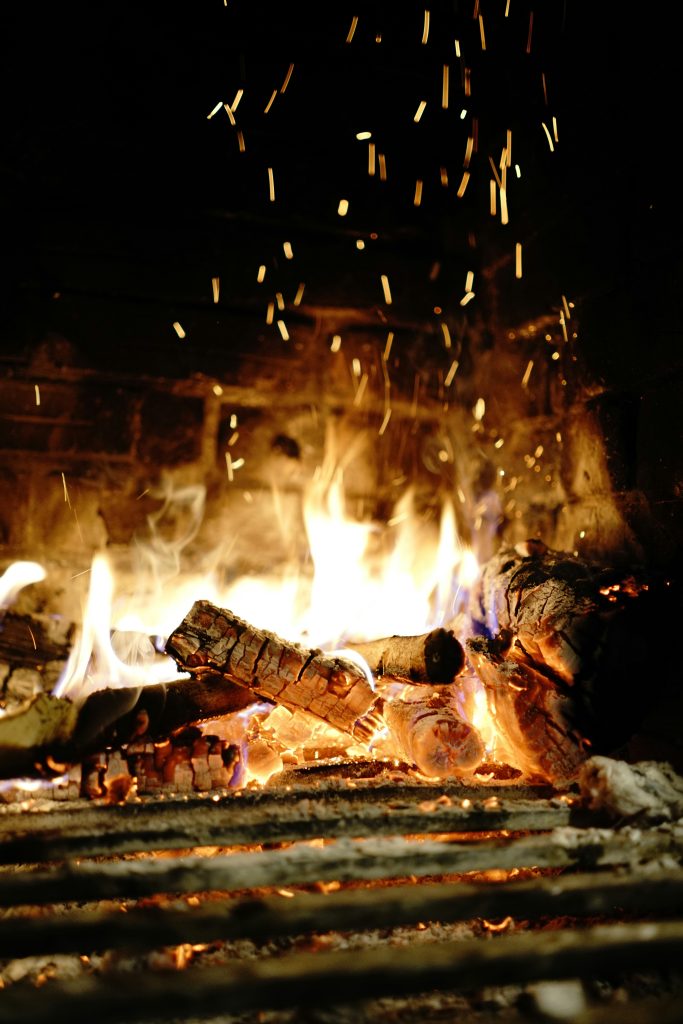
One of the key benefits is the ambience. A wood burner naturally becomes the focal point of a living space, bringing movement, glow and a sense of comfort that other heating options struggle to replicate. During colder months, this visual warmth can make a room feel inviting even before the heat fully builds, encouraging spaces to be used more often and for longer.
Wood burners also produce a distinctive type of heat. Dry, radiant warmth heats people and surfaces directly, making homes feel comfortable quickly. This can be particularly noticeable in older homes or areas prone to dampness. The heat also lingers, as surrounding materials absorb warmth and release it gradually over time.
Modern wood burners are significantly more efficient than traditional open fireplaces. Older chimney and hearth systems lost much of their heat up the flue, whereas contemporary clean-burn models are designed to retain and distribute heat more effectively. Improved combustion technology extracts more heat from less fuel while reducing emissions, meaning a well-sized burner can comfortably heat large areas.
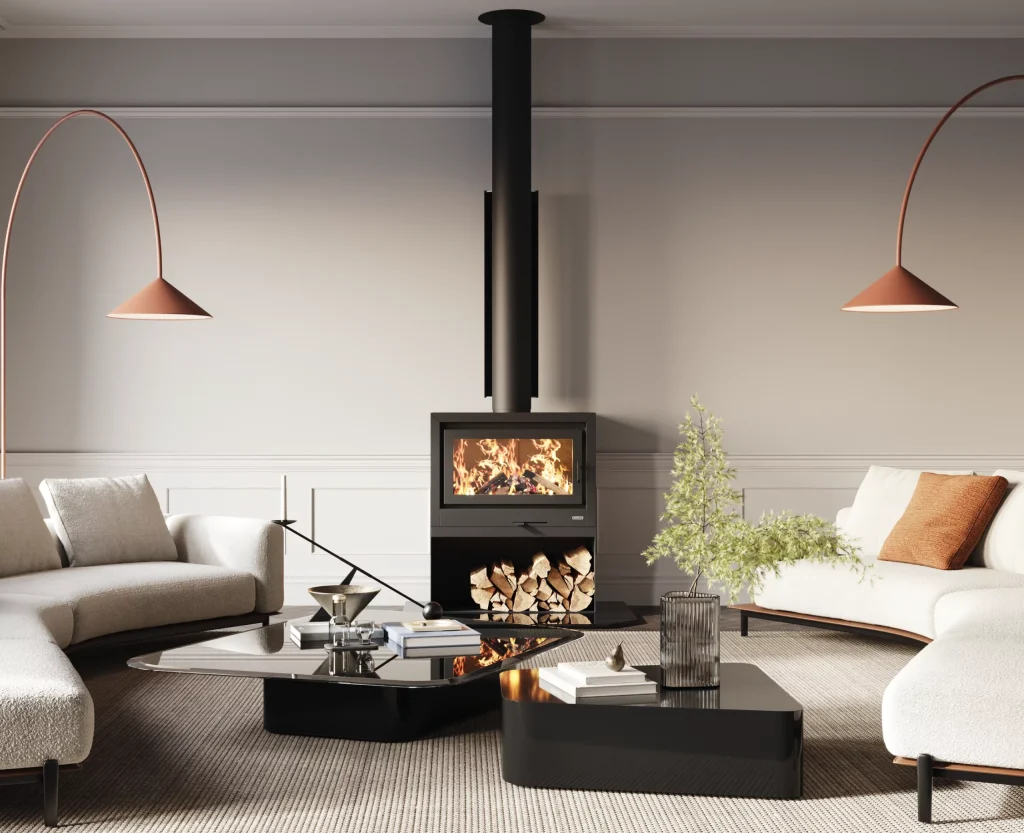
Pictured: Stoke Fireplace Studio - Spatherm Freestanding Wood Fireplace
Cost is increasingly part of the conversation. With electricity prices rising, wood burners offer a heating option with more predictable running costs. Firewood purchased in bulk or sourced locally can provide consistent winter heating without the ongoing price fluctuations associated with electric heating. Wood burners also continue to operate during power outages, providing both warmth and resilience.
Rules around wood burners can differ between urban and rural locations in New Zealand. In many urban areas, councils restrict installations to approved low-emission burners and may limit the use of older fireplaces, particularly in air quality control zones. Some regions only allow replacements for existing fires, while others permit new installations that meet clean-burn standards. Rural properties typically have fewer restrictions, and homeowners may have more flexibility in burner type and fuel use. Because requirements vary by council, it is important to check local rules early, as they can influence both the type of fireplace selected and how it is installed.
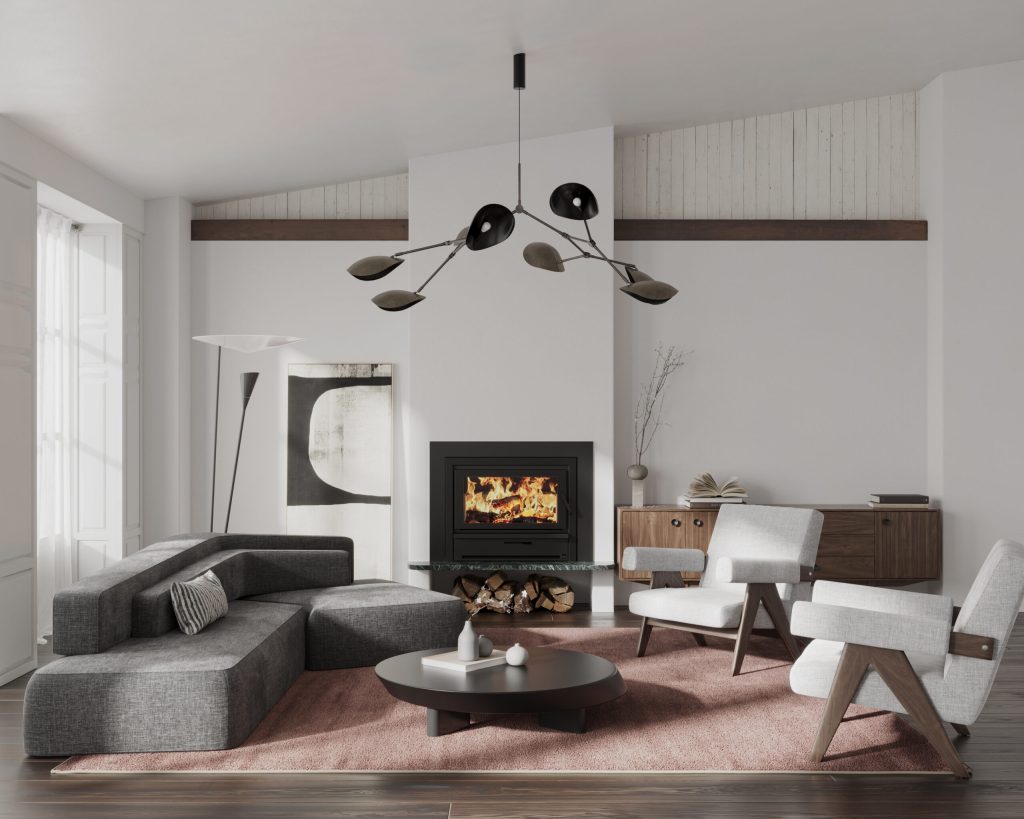
Pictured: Stoke Fireplace Studio – Spartherm XL Wood Fireplace
Planning is an important part of the process. Chimney height and clearance need to be considered to ensure proper draw and safe operation. The placement of the flue, including where it exits the home, can affect rooflines, weatherproofing and nearby outdoor areas where smoke may drift. Council permits and emission rules should be checked early, as these can influence both product selection and installation approach. Where an existing fireplace is in place, it is worth confirming whether it can accommodate a modern insert or requires modification. Clearances to surrounding materials such as flooring, walls and cabinetry also need to be factored in.
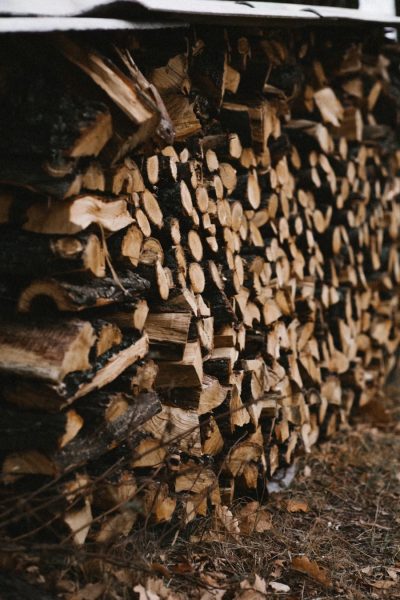
Fuel supply and storage are another consideration. Firewood must be kept dry and accessible, and the system requires more involvement than electric alternatives. For those looking for a balance between ambience and convenience, pellet fires offer an alternative. These systems use compressed wood pellets to deliver a more controlled and consistent heat output while reducing manual handling.
Choosing the right fireplace comes down to how the space is used, the importance of ambience and the desire for efficient, cost-effective heating. With modern wood burners offering improved performance and dependable warmth, they remain a compelling option for winter comfort.