KITCHEN DYNAMICS
The kitchen has become the social heart of the modern home. It is where meals are prepared, conversations unfold, children drift in after school and guests inevitably gather, no matter how comfortable the lounge may be. Whether you’re renovating or building from scratch, the best kitchens aren’t defined by the latest finishes or appliances. They are defined by how naturally they work.
Good kitchen design begins with understanding movement.
For decades, designers have used the concept of the “kitchen work triangle”, positioning the sink, cooktop and refrigerator within easy reach to minimise unnecessary steps. While this principle remains a useful starting point, today’s kitchens have evolved. They are larger, more open and far more likely to have two or more people preparing food together. Designers now focus on creating practical work zones that support the way families actually cook and live. The aim is simple: everything should be where you need it, when you need it.
Think about your own routine. Where do groceries come into the house? Where do you unpack them? Is there enough bench space beside the fridge? Can someone empty the dishwasher while another person prepares dinner? These small details have a surprisingly large impact on how enjoyable a kitchen feels to use every day.
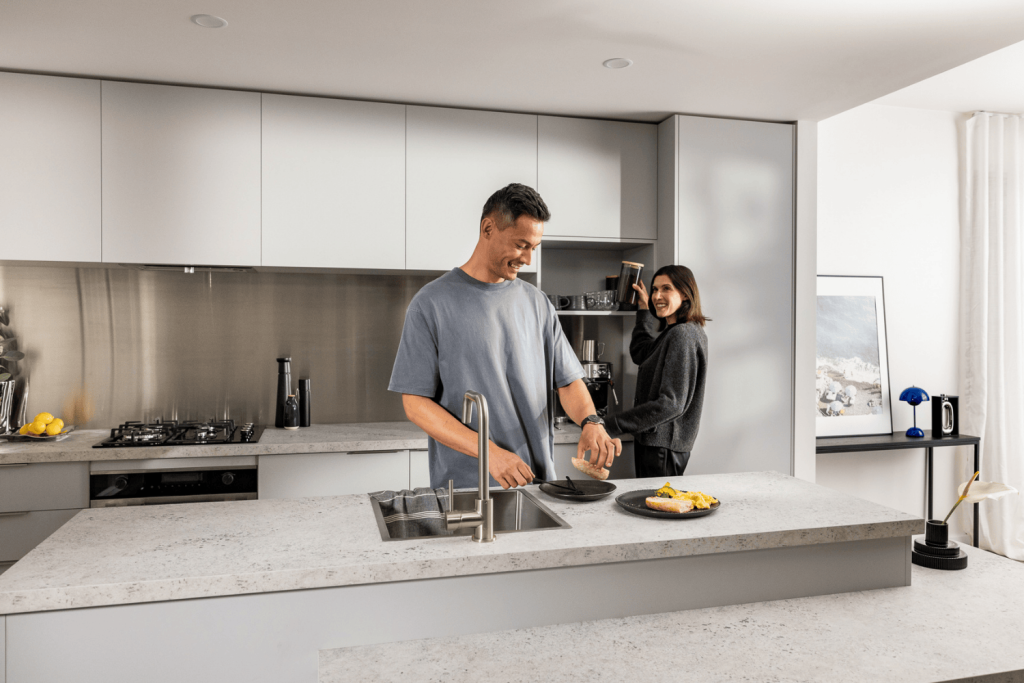
If you enjoy cooking as a couple, thoughtful planning becomes even more important.
Research into ergonomics consistently shows that reducing unnecessary movement makes tasks feel easier and less mentally demanding. In the kitchen, that means creating enough space for two people to work without constantly stepping around one another or competing for the same bench.
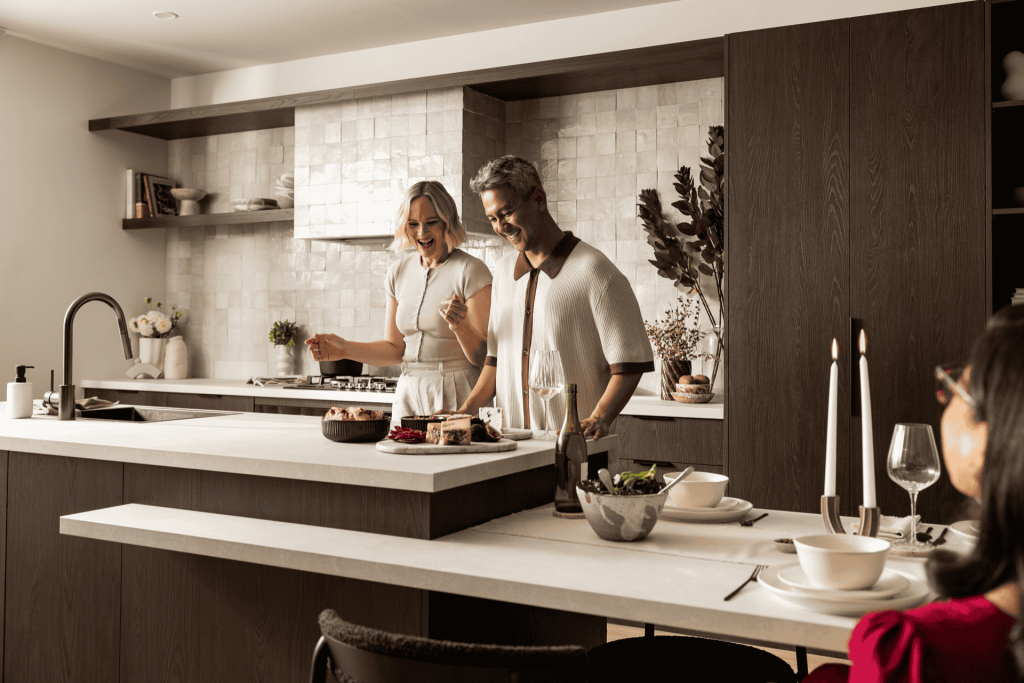
One simple approach is to create separate activity zones. One person might prepare ingredients at the island while the other cooks at the hob. A second sink, generous preparation space, or a well-positioned pantry can prevent the bottlenecks that often turn shared cooking into shared frustration. Wide walkways between benches also allow people to move comfortably without interrupting each other’s rhythm.
It’s these seemingly minor decisions that transform cooking from a chore into something genuinely enjoyable. Many couples find that preparing meals together becomes part of their daily connection, providing time to talk, unwind and share responsibilities. A kitchen that supports collaboration naturally encourages more of those moments.
Other considerations
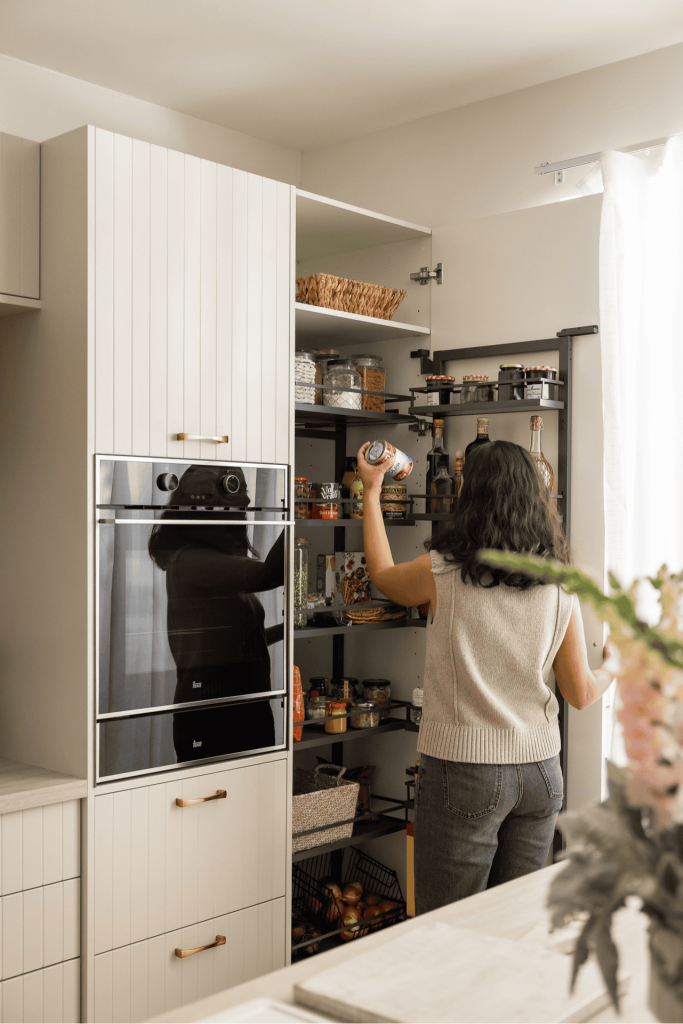
Storage plays an equally important role. Deep drawers for pots, accessible pantry shelving, dedicated recycling stations and appliance storage all reduce clutter and make everyday tasks quicker. The less time spent searching for equipment, the more time you spend actually enjoying the space.
Lighting deserves careful thought too. Layering task lighting over preparation areas with softer ambient lighting creates a kitchen that works equally well for busy weekday dinners and relaxed evenings entertaining friends.
If you’re planning your own renovation, one of the best investments you can make is seeing a well-designed kitchen in action before making final decisions.
At this year’s Auckland Home Show, the Kaboodle Kitchen will host a series of live cooking demonstrations that showcase exactly how thoughtful design improves the cooking experience. As well as professional demonstrations, couples will also take to the kitchen together, offering a practical look at how layout, workflow and smart planning can make preparing meals more enjoyable, collaborative and surprisingly stress-free.
Sometimes the best design ideas aren’t found in a catalogue. They’re discovered by watching how real people use a space.
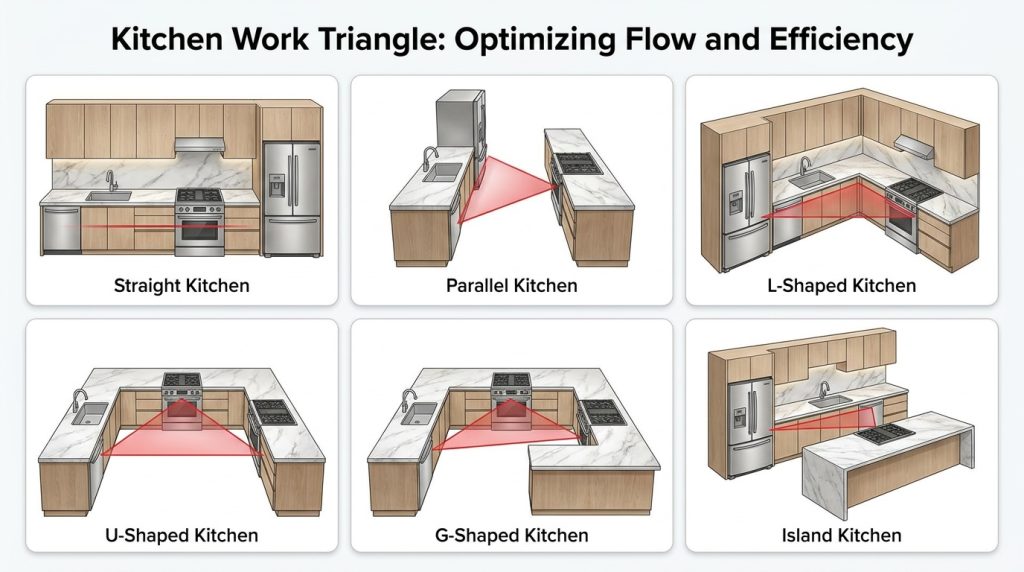
A well-planned work triangle improves kitchen flow and everyday functionality.
Whether you’re dreaming of a complete renovation or simply collecting ideas for the future, spending time exploring different layouts, storage solutions and work zones can help you create a kitchen that feels every bit as good to cook in as it looks.
Because the most successful kitchens aren’t just designed for cooking. They’re designed for living.